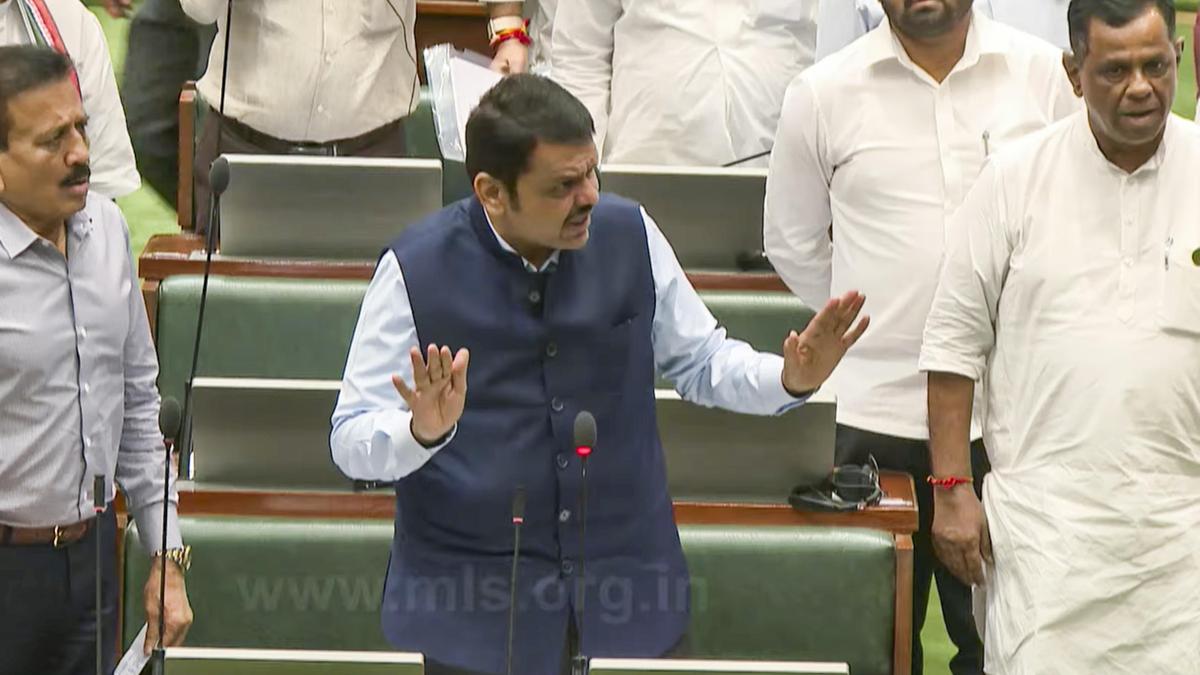
The passage of Maharashtra’s Freedom of Religion Bill was not just about legislative numbers—it revealed deeper political calculations within the opposition.
While the bill, aimed at curbing religious conversions through coercion, fraud, or inducement, was introduced by the ruling alliance, the opposition’s response was far from unified. Instead of a collective resistance, parties adopted varied positions shaped as much by political strategy as by ideology.
A key factor behind the bill’s smooth passage was the split within opposition ranks. The Uddhav Thackeray-led Shiv Sena (UBT) chose to support the legislation, breaking away from its broader alliance with parties like Congress and the Nationalist Congress Party (Sharad Pawar faction).
This divergence reflects a larger political reality in Maharashtra: issues tied to religion and identity often cut across party lines, making it difficult for opposition blocs to present a united front. Supporting or not strongly opposing such a bill can also be seen as a way to avoid alienating sections of the electorate.
Even among those who criticised the bill, resistance was measured rather than confrontational. Parties like Congress and others raised concerns about constitutionality and demanded further review, but stopped short of mounting an aggressive political campaign against it.
Another reason for the muted opposition lies in the framing of the bill itself. Positioned as a law to prevent “forced conversions,” it taps into a narrative that has already found traction in several states. This makes outright opposition politically sensitive, as parties risk being portrayed as opposing safeguards against coercion.
At the same time, internal divisions within opposition parties further diluted resistance. In some cases, differing views within the same party indicated that there was no clear consensus even internally on how strongly the bill should be opposed.
The result was a legislative moment shaped less by overwhelming agreement and more by fragmented opposition and strategic restraint.
In essence, the bill’s passage highlights how contemporary politics often operates—not through clear ideological battles, but through calculated positioning, where parties weigh public perception, electoral risks, and alliance dynamics before deciding how far to oppose a contentious law.