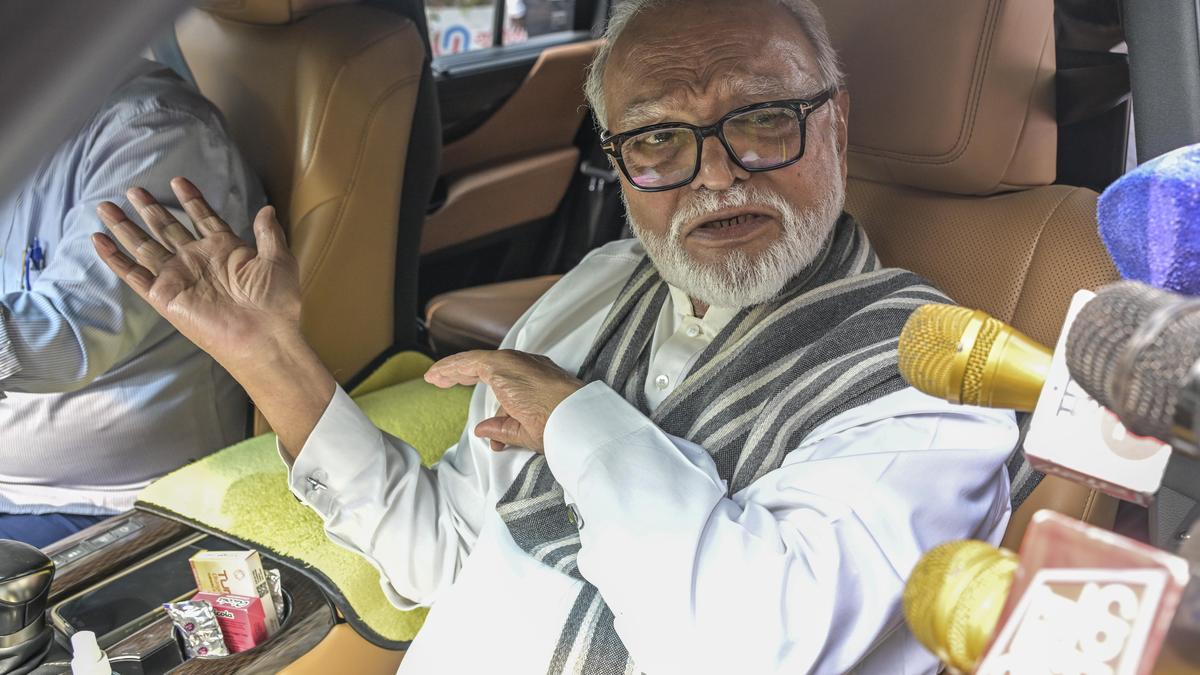
A recent aviation incident involving a ministerial helicopter has sparked questions about flight safety protocols and accountability in the state, after the aircraft carrying Maharashtra cabinet minister Chhagan Bhujbal was forced to land in a vehicle parking area instead of a designated helipad. While no injuries were reported, the episode has prompted the state government to order an official inquiry into what some aviation and safety experts are calling an avoidable error.
The incident occurred in Purandar taluka, near Pune, when the helicopter was en route to an event commemorating the 200th birth anniversary of social reformer Jyotiba Phule. Reported video footage from the site shows the aircraft settling onto a clogged parking surface, raising dust and narrowly avoiding trees and other nearby obstructions — a scenario that aviation specialists say would pose serious risks in less fortunate circumstances.
Probe Ordered Despite Evasive Response
Chief Minister Devendra Fadnavis, who was present at the same event, announced that he had asked for a probe into the circumstances that led to the mislanding. Critics, however, have pointed out that such an investigation is overdue, given the visibility and risks associated with VIP helicopter travel in congested or poorly co-ordinated landing zones.
The probe is expected to involve not only state authorities but also the Directorate General of Civil Aviation (DGCA), which will examine whether proper protocols were followed, including site assessment, pilot decisions regarding visibility and navigation, and communications between ground observers and aircrew.
Risks, Ratings and Recent Aviation Worries
Experts highlight that helicopters — though capable of vertical take-offs and landings — operate under strict procedures that govern obstacle clearance, safety margin calculation, and visual flight rules. Landing outside designated helipads, particularly in unprepared surfaces such as parking lots, can subject aircraft and passengers to undue risk if there are hidden debris, uneven ground or overhead obstacles.
Critics note that this is not an isolated concern. Earlier this year, Maharashtra faced a far deadlier situation when a Learjet carrying Ajit Pawar, the state’s then-deputy chief minister, crashed during an attempted landing at a private airstrip, killing him and four others. The state government, including Fadnavis, has already sought a broader investigation into that accident, pushing for a transparent and unbiased probe by central authorities.
The resurfacing of safety questions — first with the Baramati crash and now with Bhujbal’s helicopter — has drawn criticism from opposition leaders and public safety advocates alike, who argue that protocols for VIP flights should be stricter and more uniformly enforced. Some have called for independent audits of state aviation practices to prevent future mishaps.
Political and Public Response
On social media and in local commentary, many observers have questioned the government’s readiness to investigate incidents only after they become public. There are calls for immediate audits of maintenance records, landing site preparations and decision-making authority in aerial operations involving public officials.
Meanwhile, the pilot’s decision to put down the helicopter in a non-standard area — officially described as a mislanding rather than an accident — has raised eyebrows in aviation circles, since fuel, weather or navigational issues would normally force pilots to divert to safer alternatives or delay landing until conditions improve.
What Comes Next
As Maharashtra awaits the probe’s findings, the focus has shifted to how effectively the investigation can go beyond a surface-level review to address deeper systemic issues. Safety analysts stress that a thorough inquiry may have wider implications for regional aviation norms, especially in states where VIP transport is frequent and helipads or landing zones are not always ideally located.
For residents and critics, the hope is that this mislanding — described by some as a “close call” — will not be swept under the carpet, but instead become a catalyst for reforms that enhance safety and transparency in government aviation operations.