Mumbai’s worsening water crisis is no longer just about scarcity—it is increasingly being seen as a reflection of deeper infrastructure and governance challenges.
The issue came into focus after a corporator raised concerns over irregular water supply across several parts of the city, highlighting inconsistencies in both timing and pressure. The complaint was formally brought before the civic body, signalling that the problem has moved beyond isolated local disruptions to a broader systemic concern.
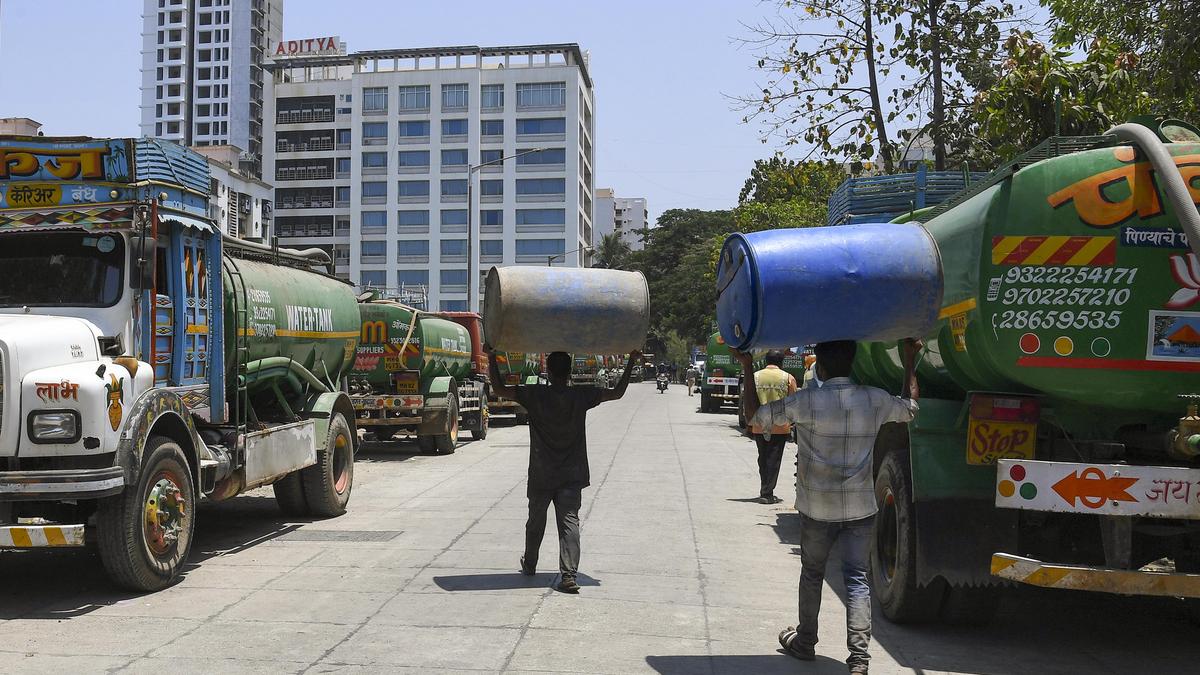
At the ground level, residents are facing unpredictable supply cycles, forcing many to rely on private water tankers or store water in advance—an indication of declining trust in municipal distribution systems. Reports of low pressure and uneven supply across neighbourhoods further point to inefficiencies in the network.
The crisis is compounded by structural limitations. Mumbai already faces a gap between demand and supply, with the city receiving significantly less water than it requires daily. Rapid urbanisation, aging pipelines, leakages, and unauthorised water usage continue to strain the system.
What makes the situation more complex is the growing dependence on informal solutions. Allegations of a “tanker economy” thriving alongside official supply systems suggest that gaps in public infrastructure are being filled by private players—often at higher costs to residents.
Civic officials have acknowledged the concerns and indicated that measures are being explored, including infrastructure upgrades and improved monitoring. However, these are long-term solutions, while the current irregular supply remains an immediate challenge for households.
In essence, the crisis reflects a larger urban reality: Mumbai’s water problem is not just about availability, but about distribution, infrastructure efficiency, and governance capacity.
Unless these systemic issues are addressed, periodic shortages and irregular supply may continue to define the city’s water landscape—even in years with adequate rainfall.